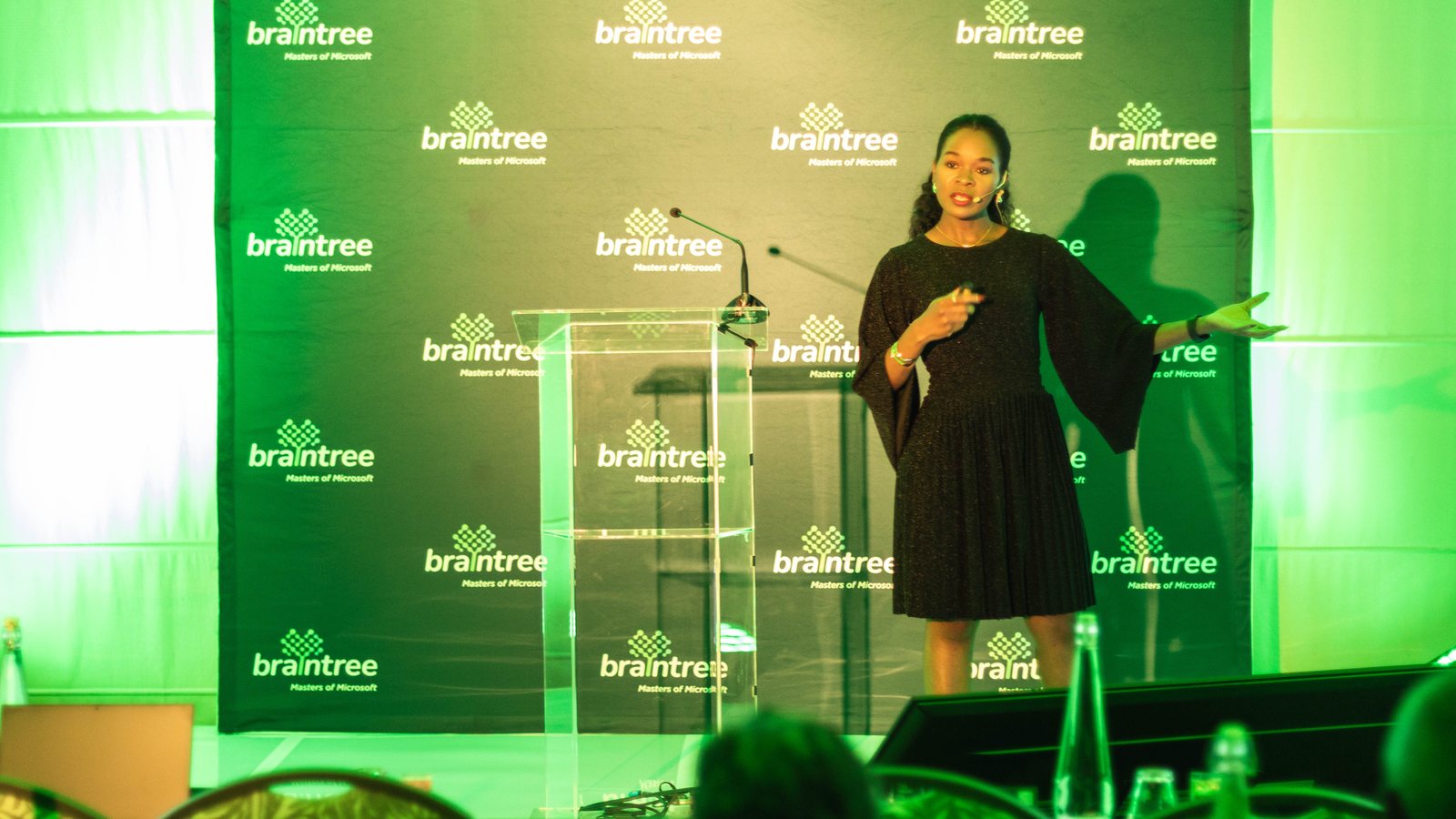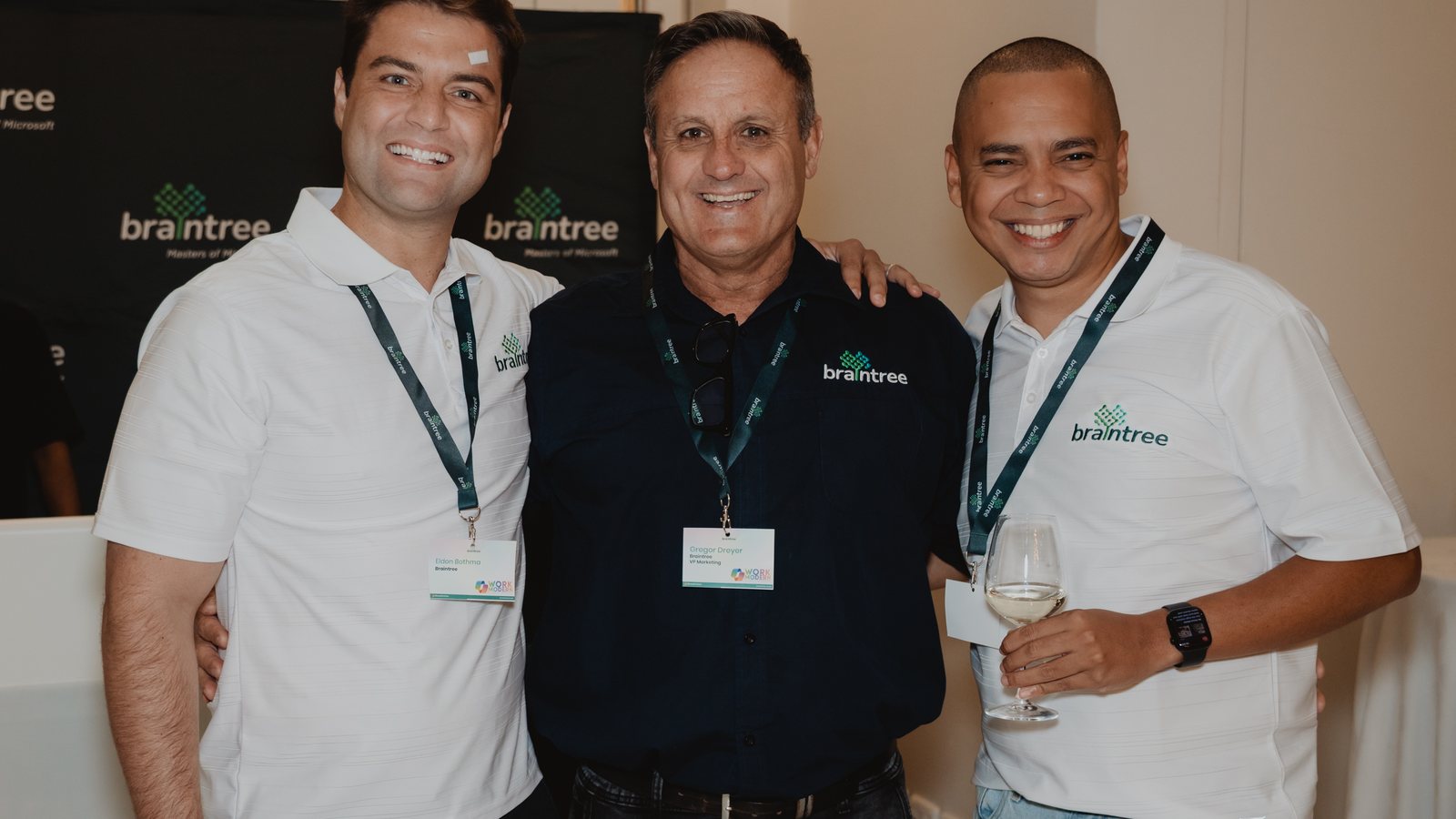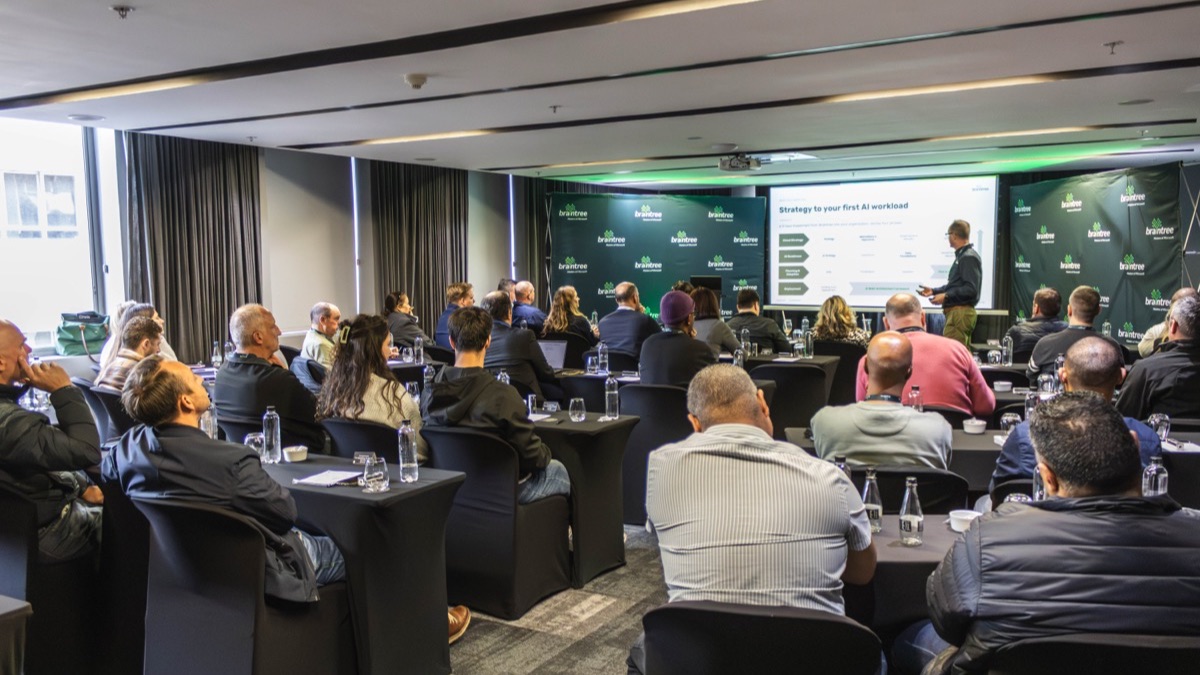
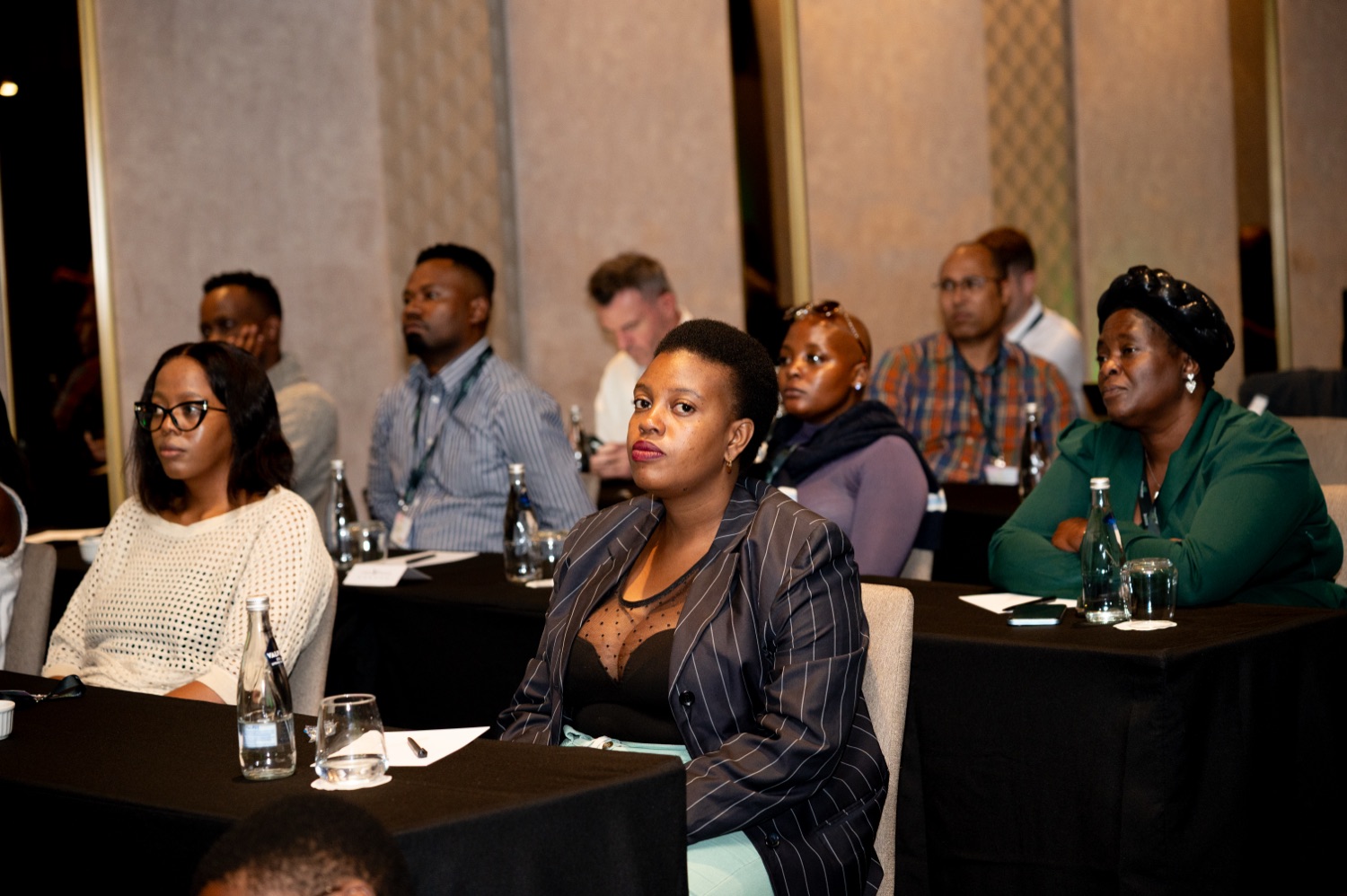
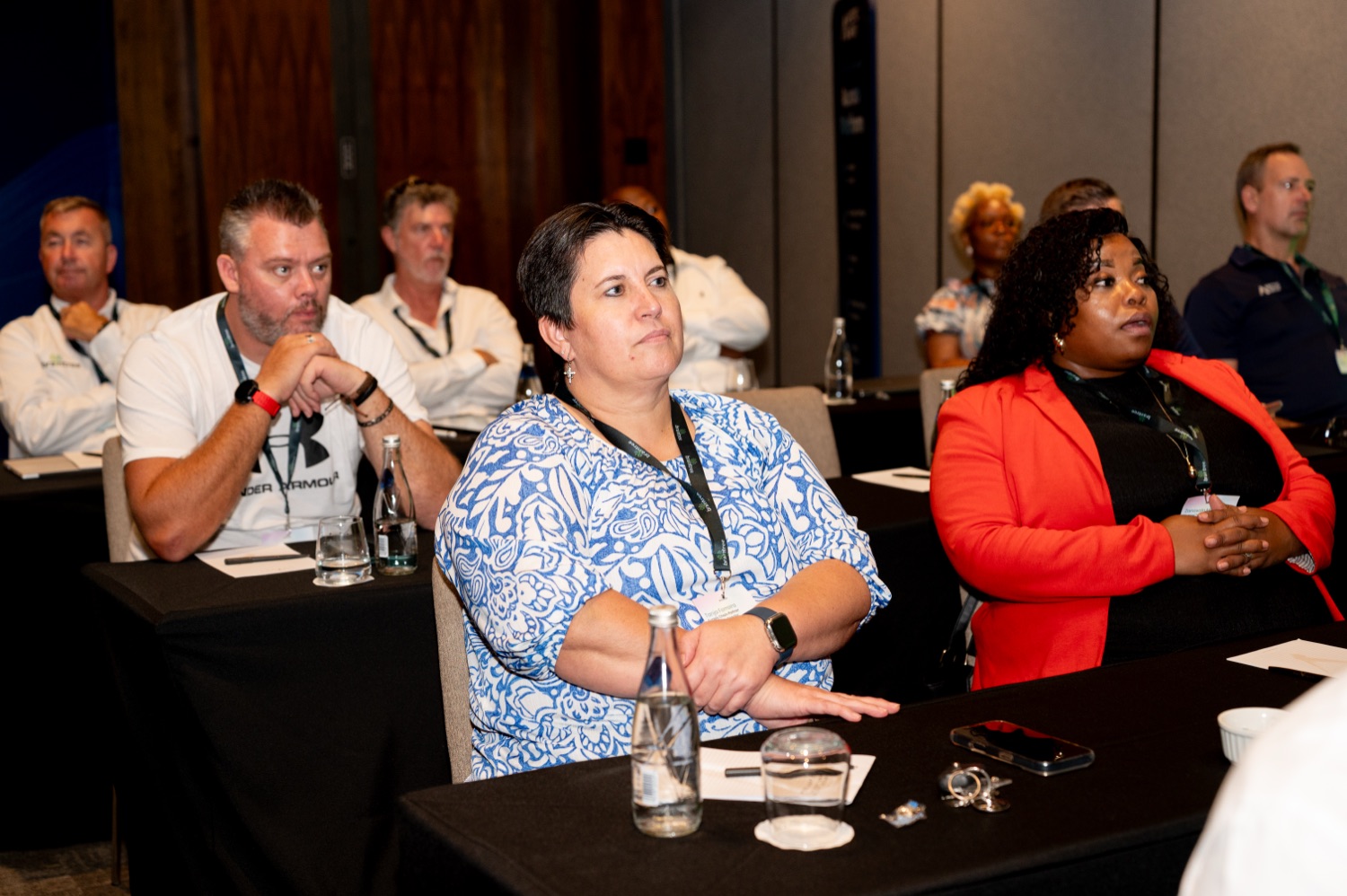
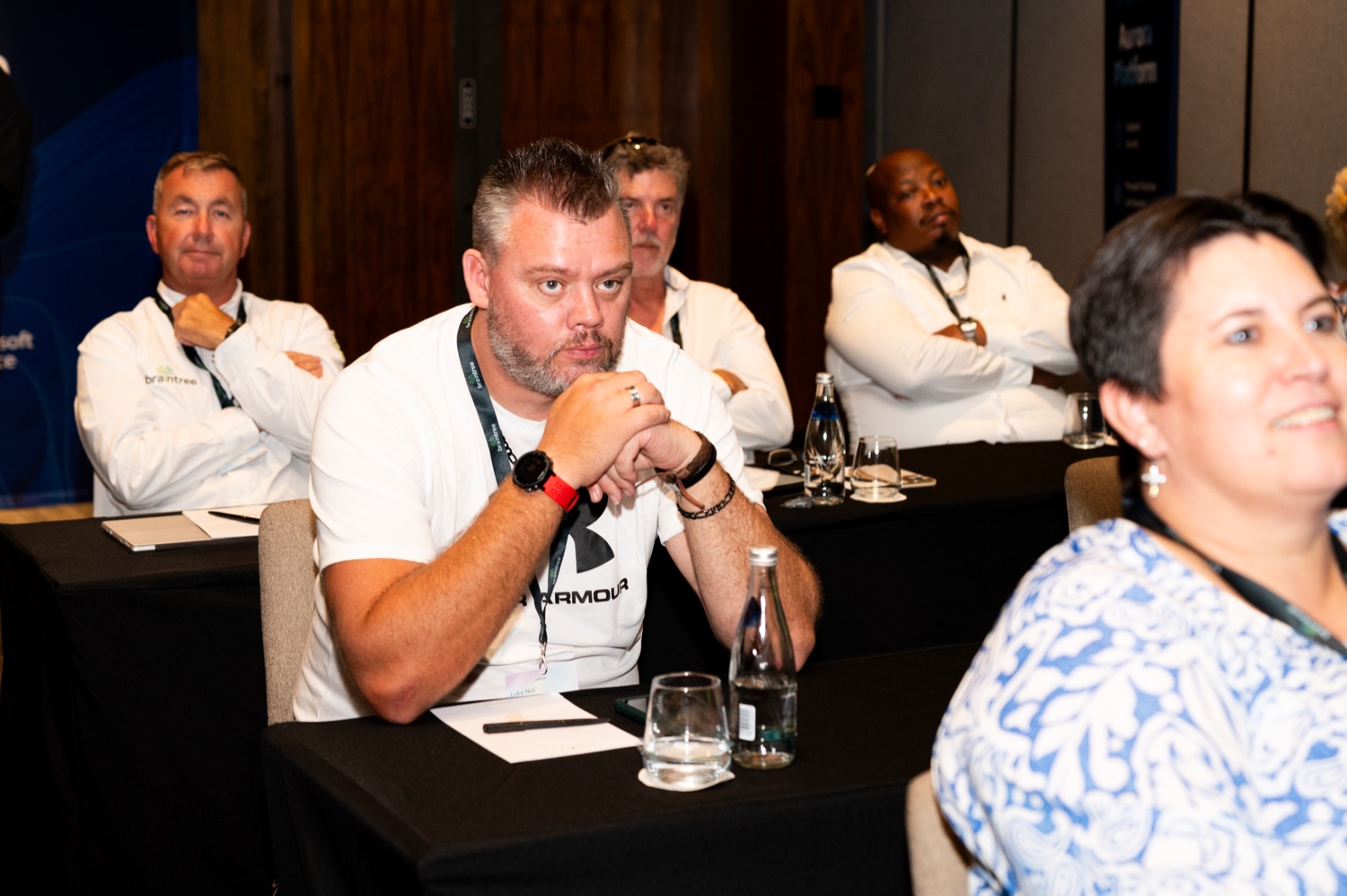
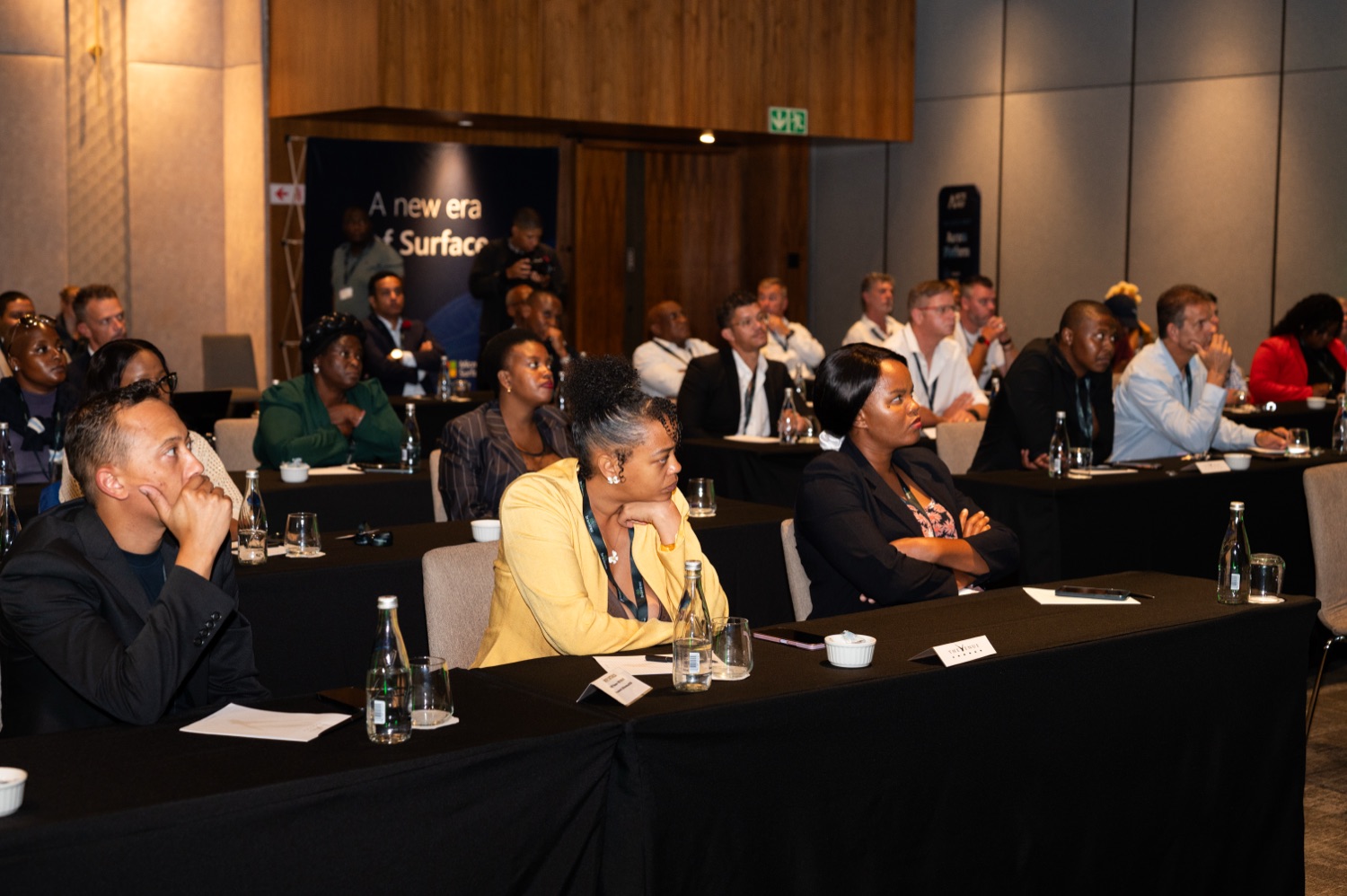
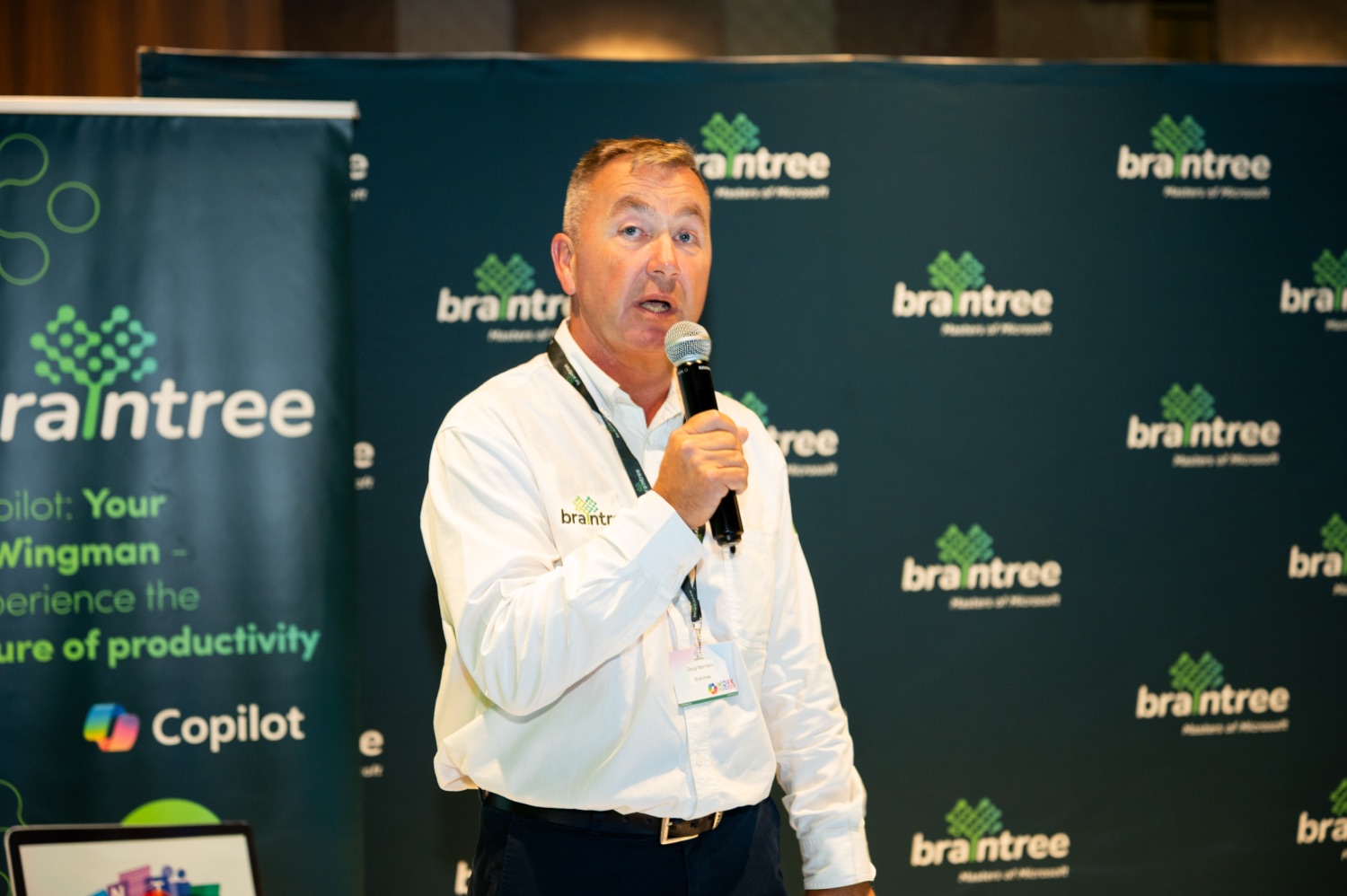
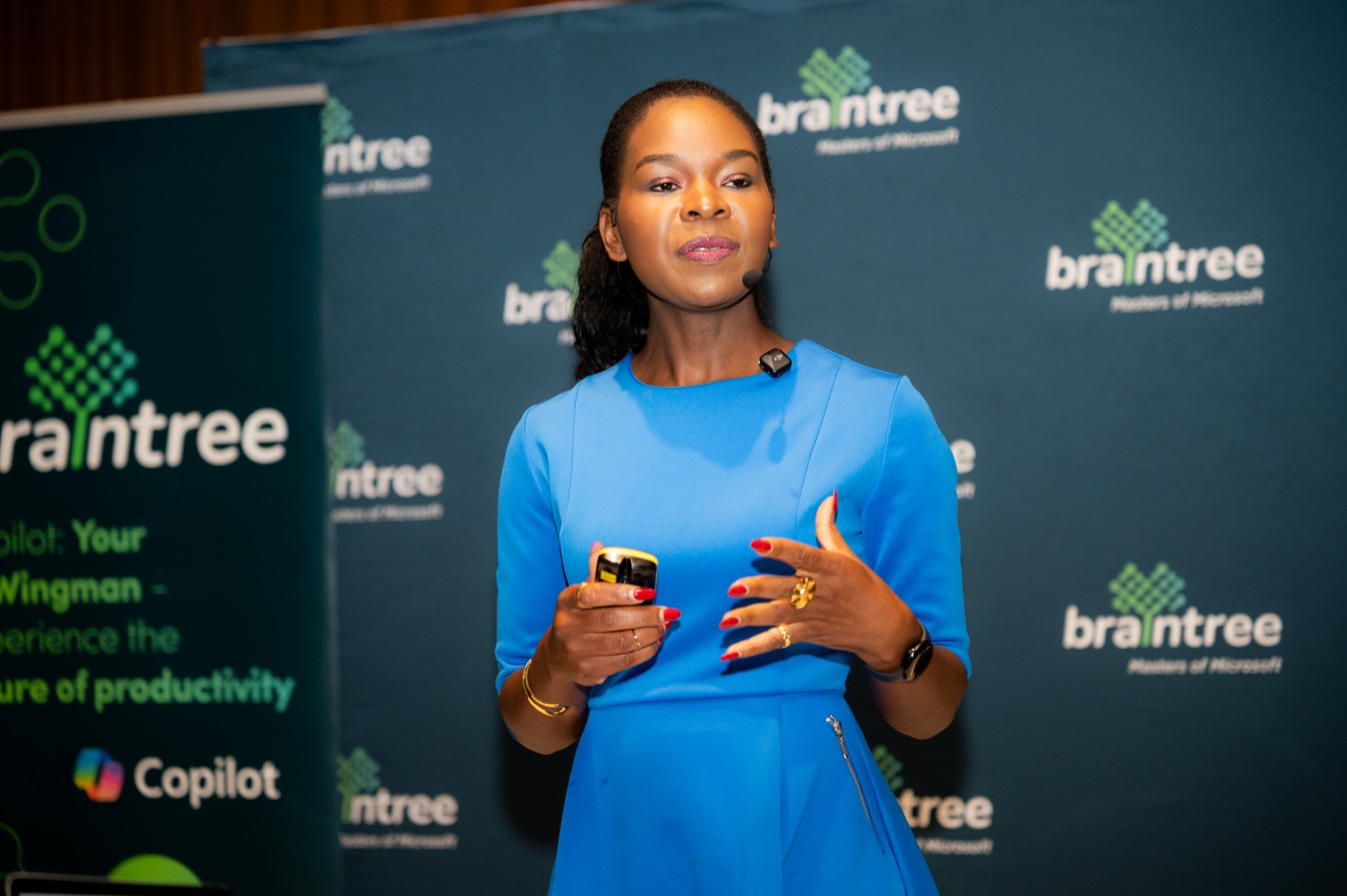
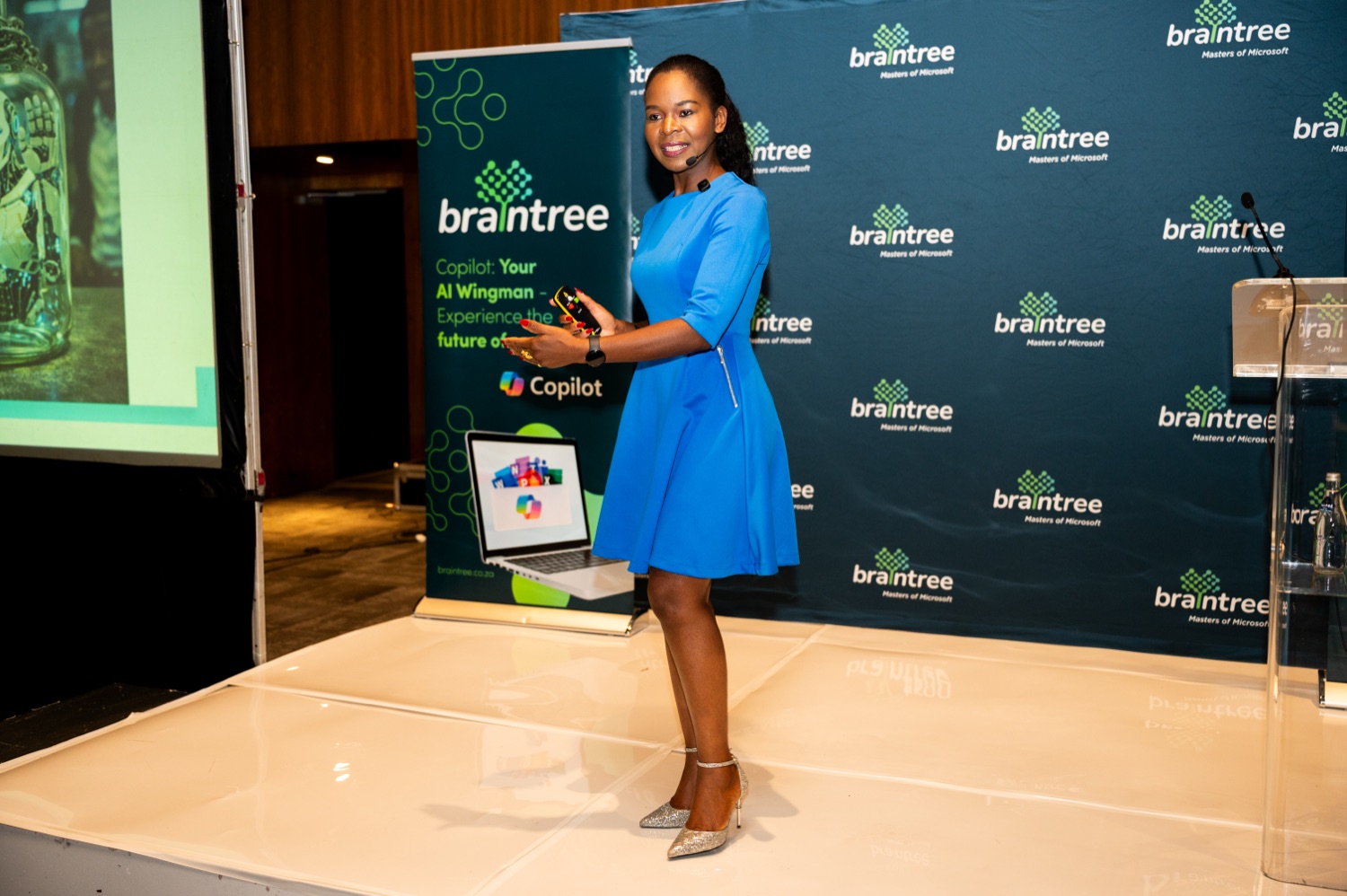
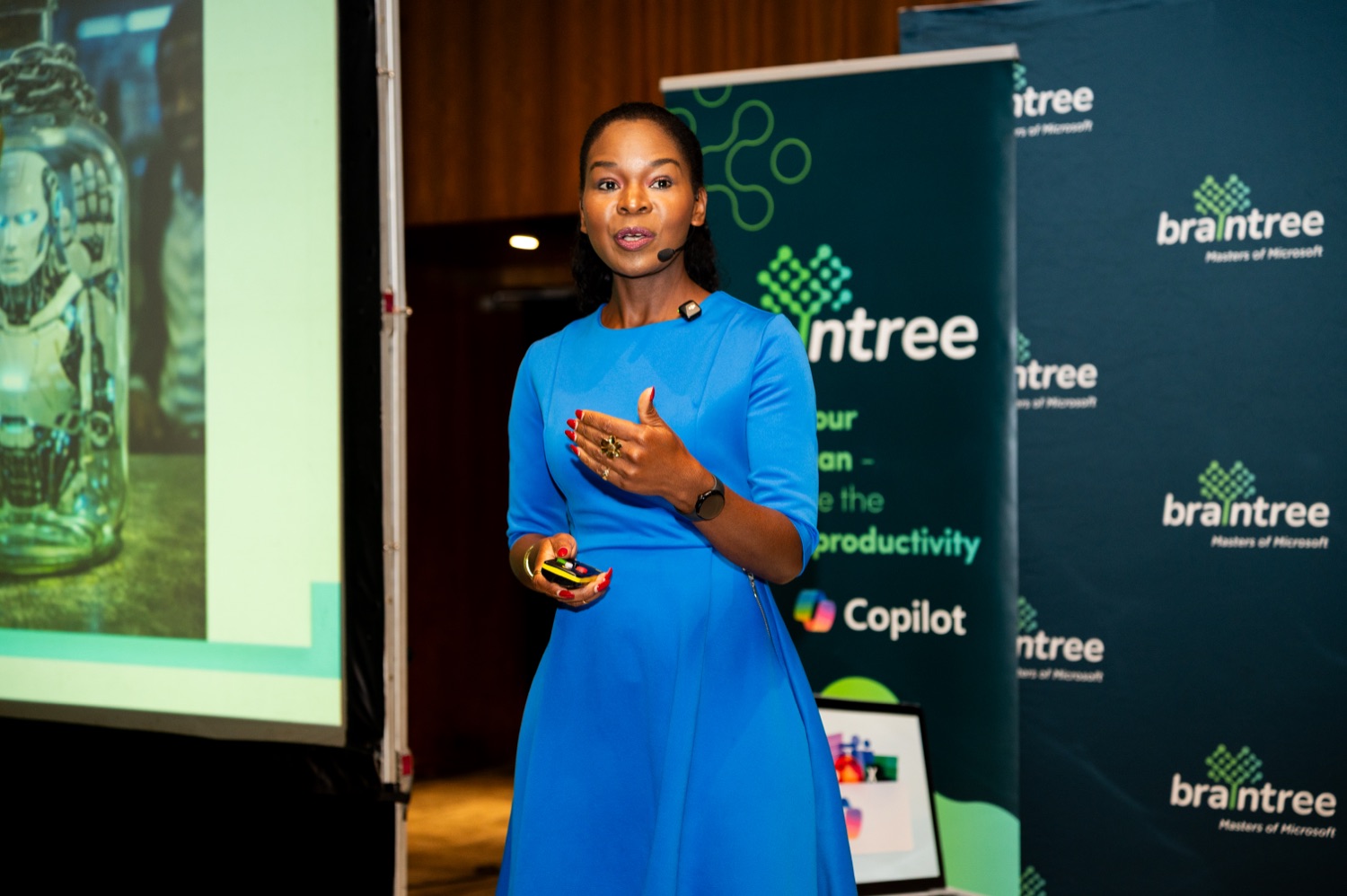
82 business and IT decision-makers gathered at The Houghton Hotel for a focused executive session on AI, security and the future of the modern workplace.
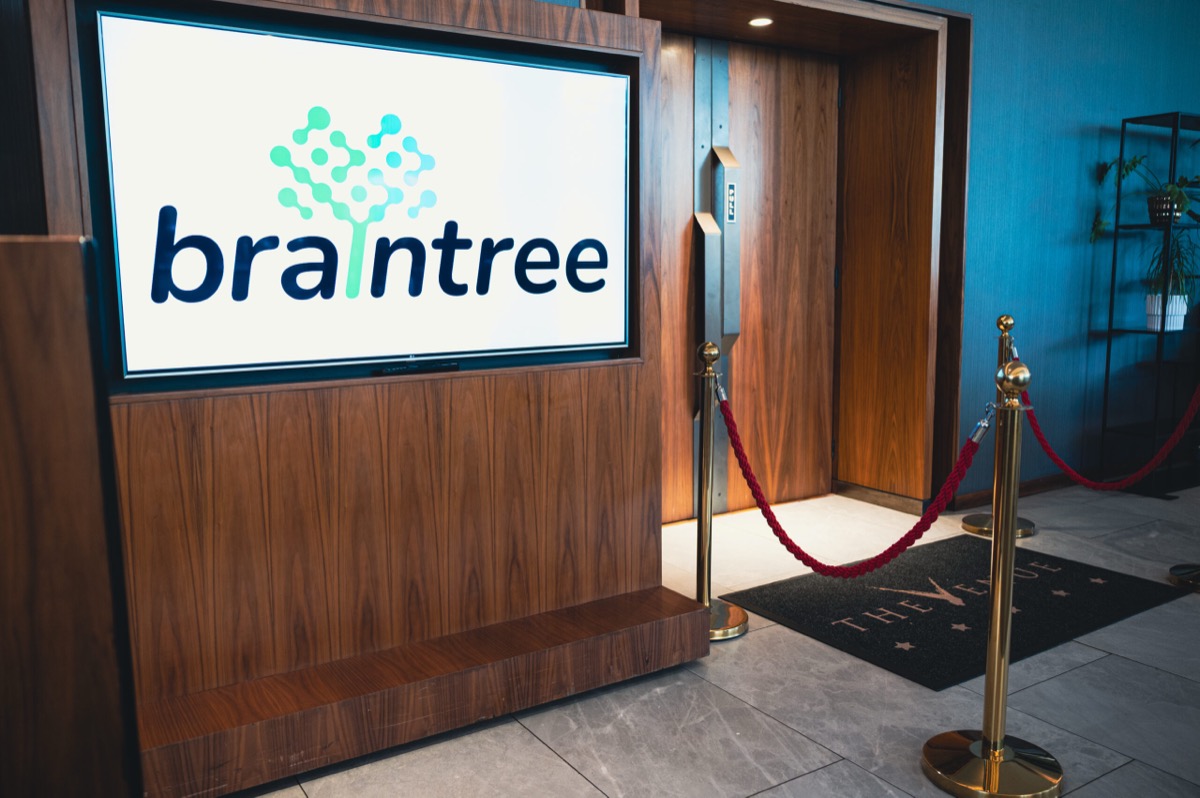
Setting the scene
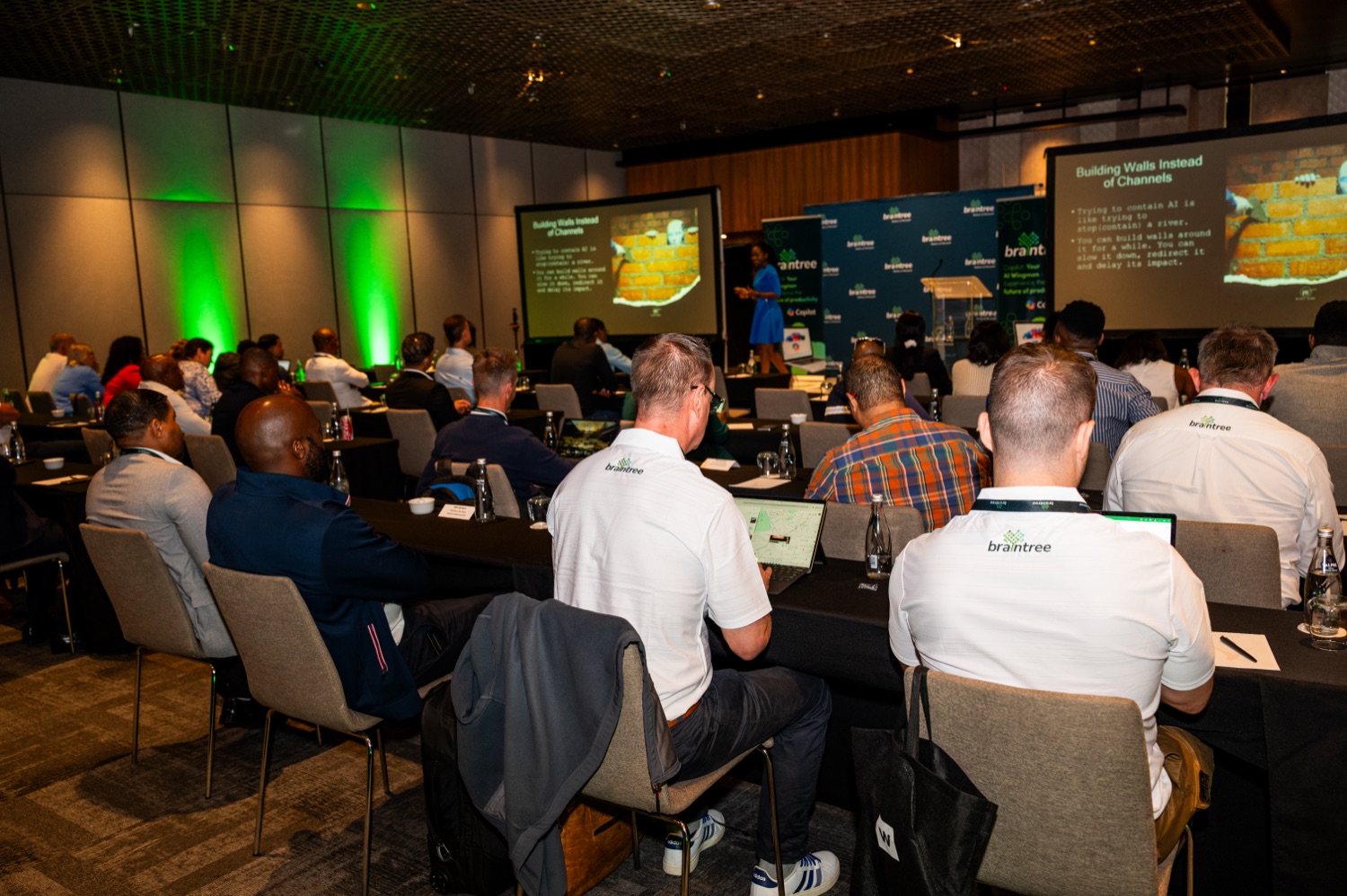
The Houghton's executive lounge had been set for working, not watching. Round tables, no theatre rows. Microsoft Surface devices live on every place setting with Copilot already signed in. Coffee, not a corporate buffet. The Sandton skyline visible through the glass and a delegate list that ran across banking, retail, manufacturing, consulting, telco and government in a single room.
The format was set up front. No pitch deck. No company brochure. A working session where Braintree, Microsoft and Arctic Wolf walked through what AI at work actually looks like once it gets out of the demo environment and into a real business with real people and real compliance constraints. The audience was senior enough to ask the hard questions and curious enough to want a peer view, not a vendor view.
Braintree opened on the framing question every IT leader in the room is currently being asked by their executive: where do we put AI to work first, and how do we keep the rollout from becoming the next costly transformation programme nobody finishes? Microsoft followed with a live walk through Copilot embedded in Teams, Word, Excel and Outlook, focused on the workflows the people in that room actually run every week. The energy in the room shifted within the first 20 minutes from polite interest to active note-taking.
The conversation that set the tone
Two themes did most of the work in the room.
The first was governance. The financial services attendees, in particular, pressed on data sovereignty, audit trails and the question of who exactly is liable when a Copilot output gets used in a client-facing communication. Braintree's response, on stage and at the tables, was that the governance question is the AI question. Organisations with a clear AI policy are deploying Copilot faster and more confidently than organisations still drafting one. The technology is ready. The policy work is the gate.
The second theme was change management. The room agreed quickly that Copilot is not a software install. It is a habit change. Several delegates shared what they have already learned from pilot rollouts in their own businesses. The pattern was consistent. Where Copilot has landed well, leaders are running short, frequent, departmental training sessions rather than a single rollout day. They are also publishing internal examples of good prompts as a working library. The teams that treat AI adoption as a communications and culture project, not an IT project, are showing the strongest 90-day pickup.
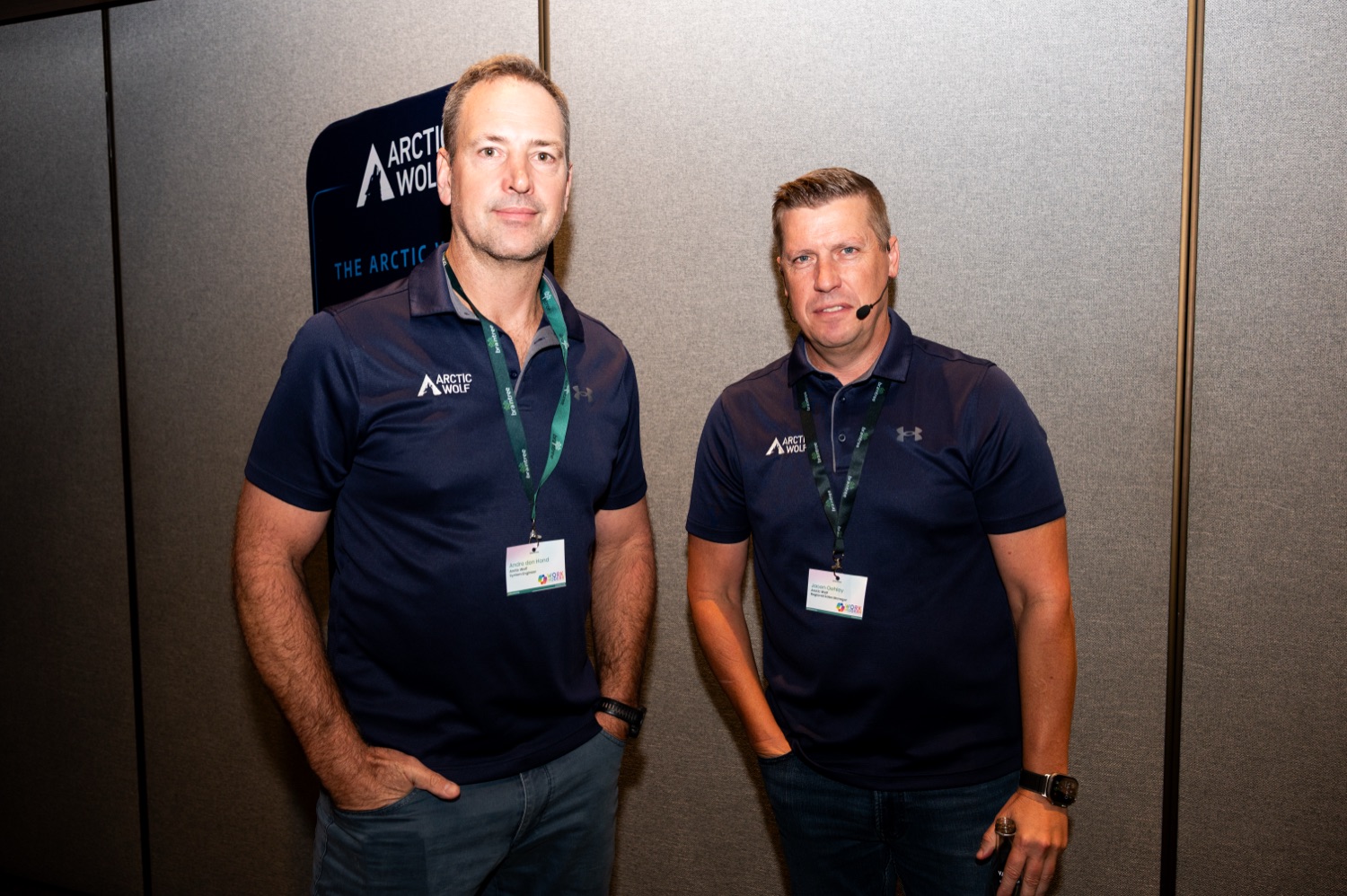
Arctic Wolf carried the security session. The KZN delegates would later see the same speaker in Durban, but in Johannesburg the framing was specific to multi-vendor environments. Most enterprises in the room run three or four security tools that do not talk to each other. The session focused on consolidation, posture management and what 24/7 Managed Detection and Response actually delivers once AI is layered on top of it. The questions afterwards stayed practical. How does this plug into Microsoft Sentinel. How does it report to the board. What does the first quarter of operation look like.
What stayed with us
The Hardware as a Service segment shifted the room.
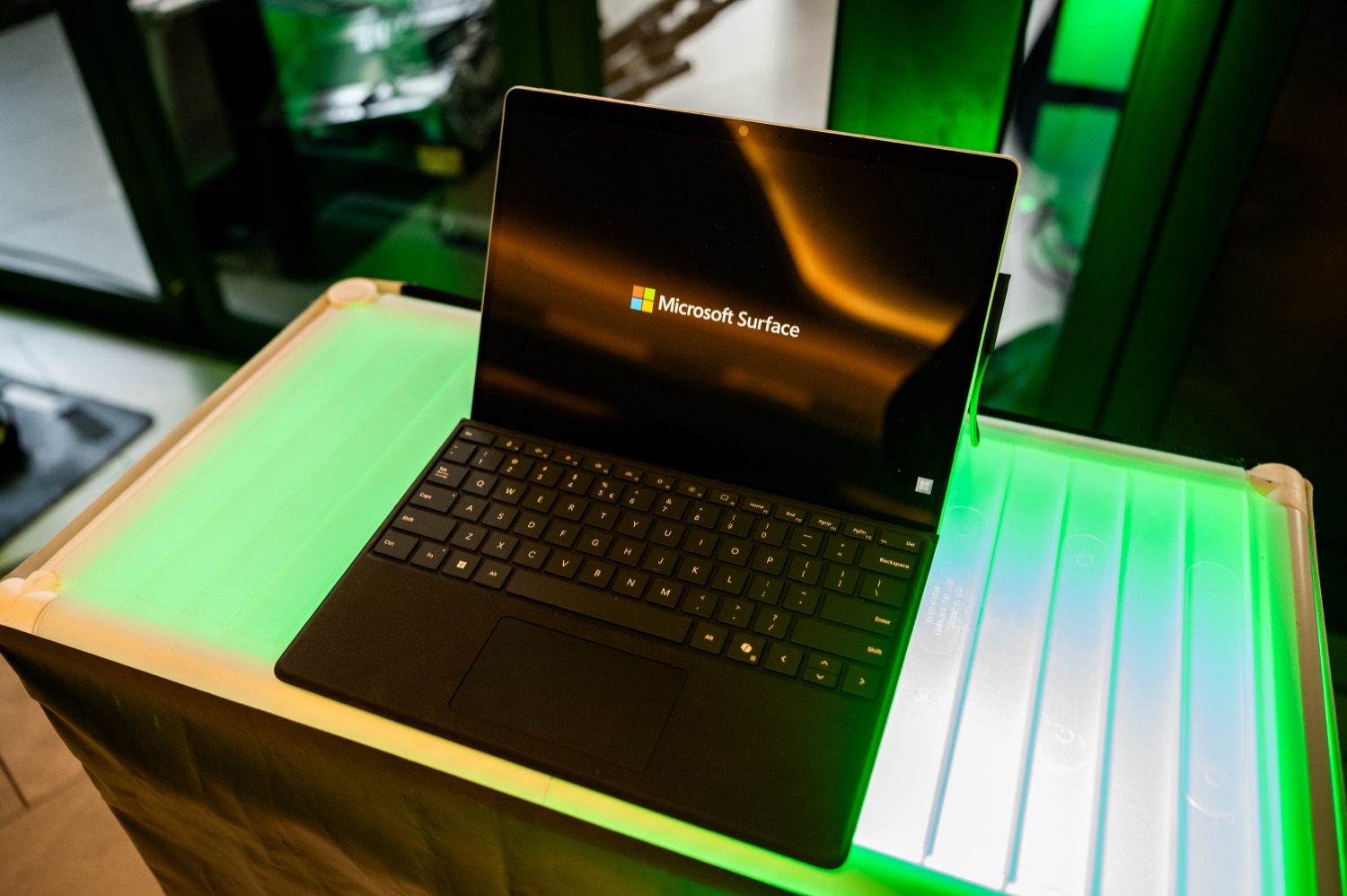
Braintree's HaaS demonstration put Surface Pro Copilot+ PCs, Surface Hub 3 and the broader Surface lineup in attendees' hands. The pitch was financial, not technical. In an AI-first world, the device is no longer a commodity. It is a strategic decision. The conversation moved quickly from device specs to the operating model question. Most procurement teams in the room are still treating laptop refreshes as one-off capital cycles that take six to nine months to approve. Braintree's pricing model presents an alternative. Predictable monthly rental, current-generation AI-capable hardware, refresh cycles that track AI evolution rather than depreciation schedules.
A Surface Pro 11 13-inch Intel at R1,749.36 per month, per device. A Surface Hub 3 50-inch at R11,510.75 per month for the boardroom that needs hybrid meeting parity. Numbers small enough to be a Finance line item, large enough to make a real productivity difference. Several delegates left with calculator-on-phone moments, working out the headcount maths in real time.
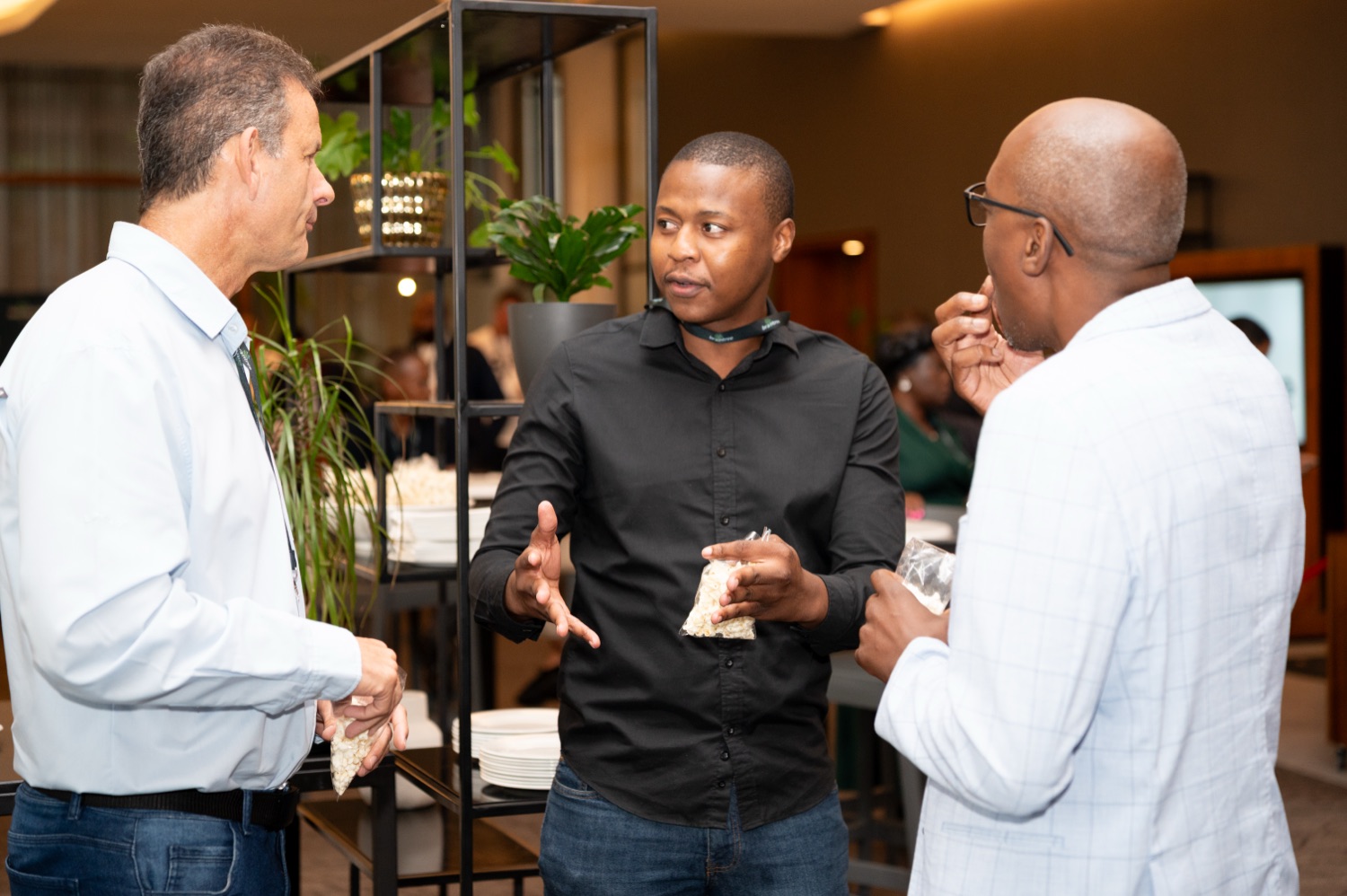
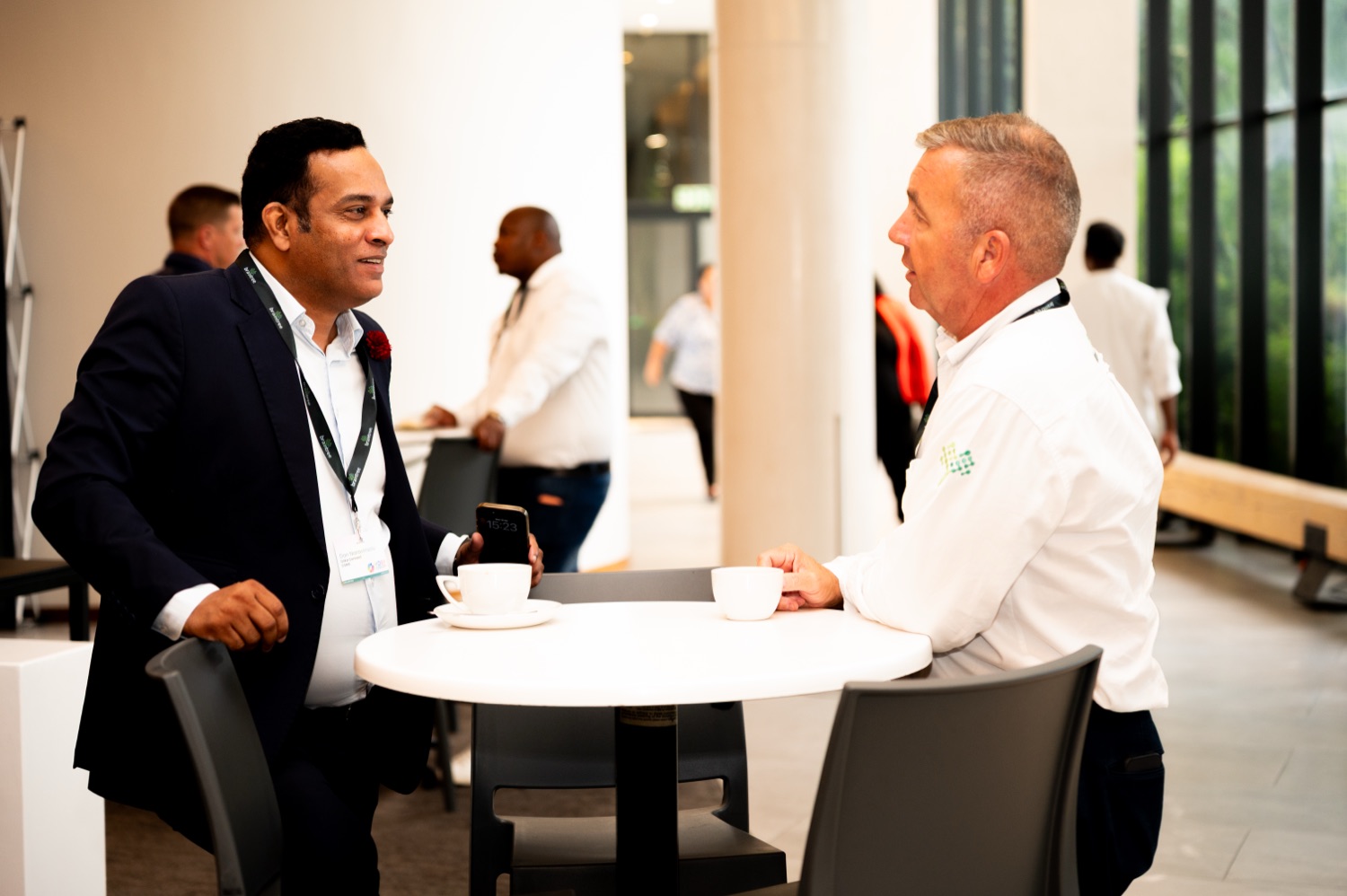
The afternoon closed with networking drinks. The conversations carried on for another 90 minutes after the formal session ended. A few visible themes in the post-event exchanges: AI Jumpstart pilots being scoped at the table, Surface Hub upgrades being added to next quarter's procurement cycle, and a quiet acknowledgment from more than one CIO in the room that they had been overthinking where to start with Copilot for the last six months. The right move, several said, is to start. Use it. Watch what the people in the business actually do with it. Then plan from observed behaviour, not from a hypothesis.
Key takeaways from the session
- The governance question is the AI question. The organisations deploying Copilot fastest are the ones who finished the policy work first, not the ones with the strongest IT capability.
- Change management is a culture project, not an IT project. Short, frequent, departmental training plus an internal prompt library beats a single rollout day every time.
- Multi-vendor security tooling is the silent productivity tax most enterprises are still paying. Consolidating onto a unified posture and adding 24/7 Managed Detection and Response is the smarter move.
- AI-capable hardware is a procurement decision, not a refresh decision. Per-device monthly rental on current-generation Surface frees finance to align hardware cycles with AI maturity, not depreciation.
Moments from the afternoon
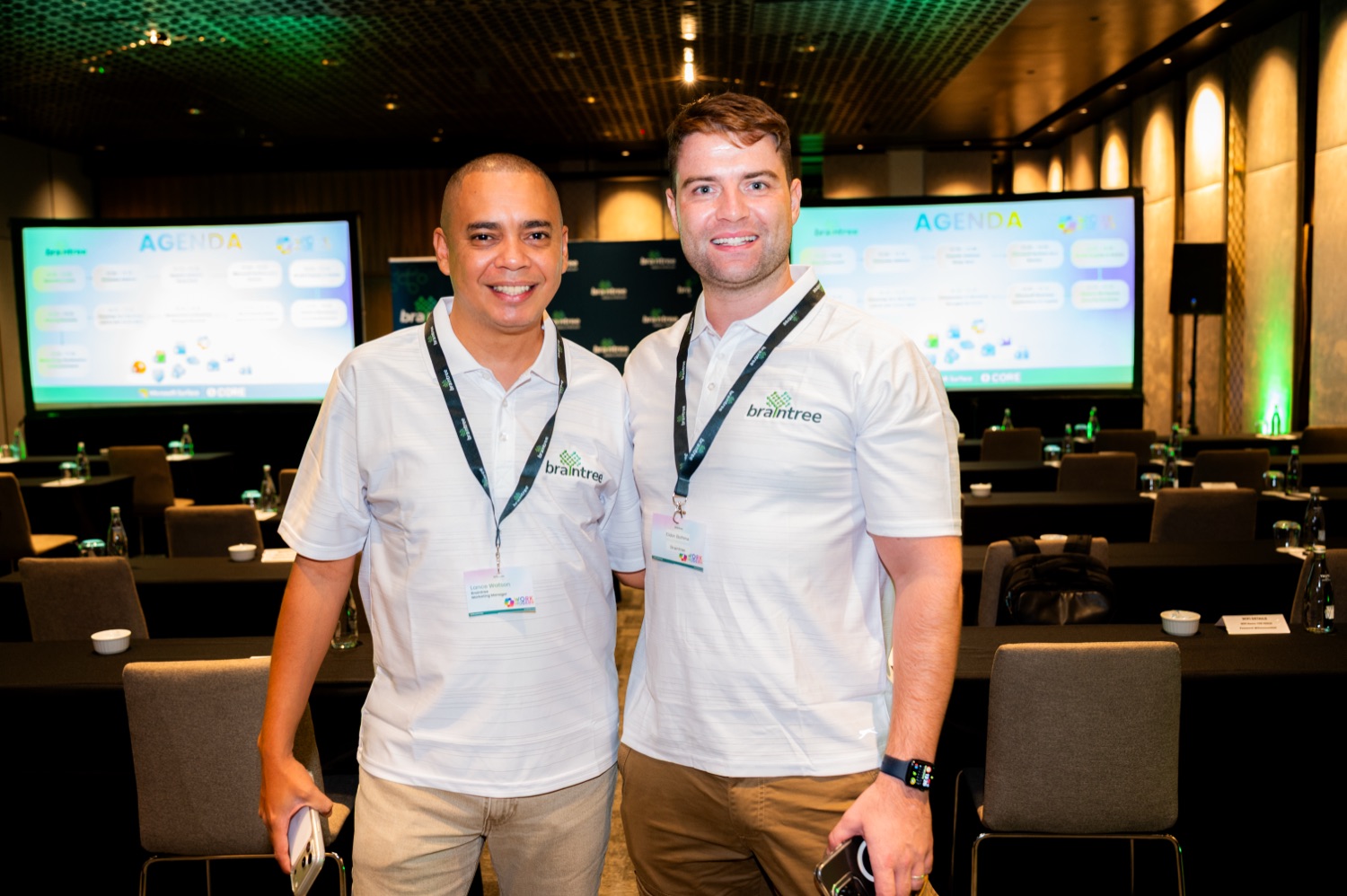
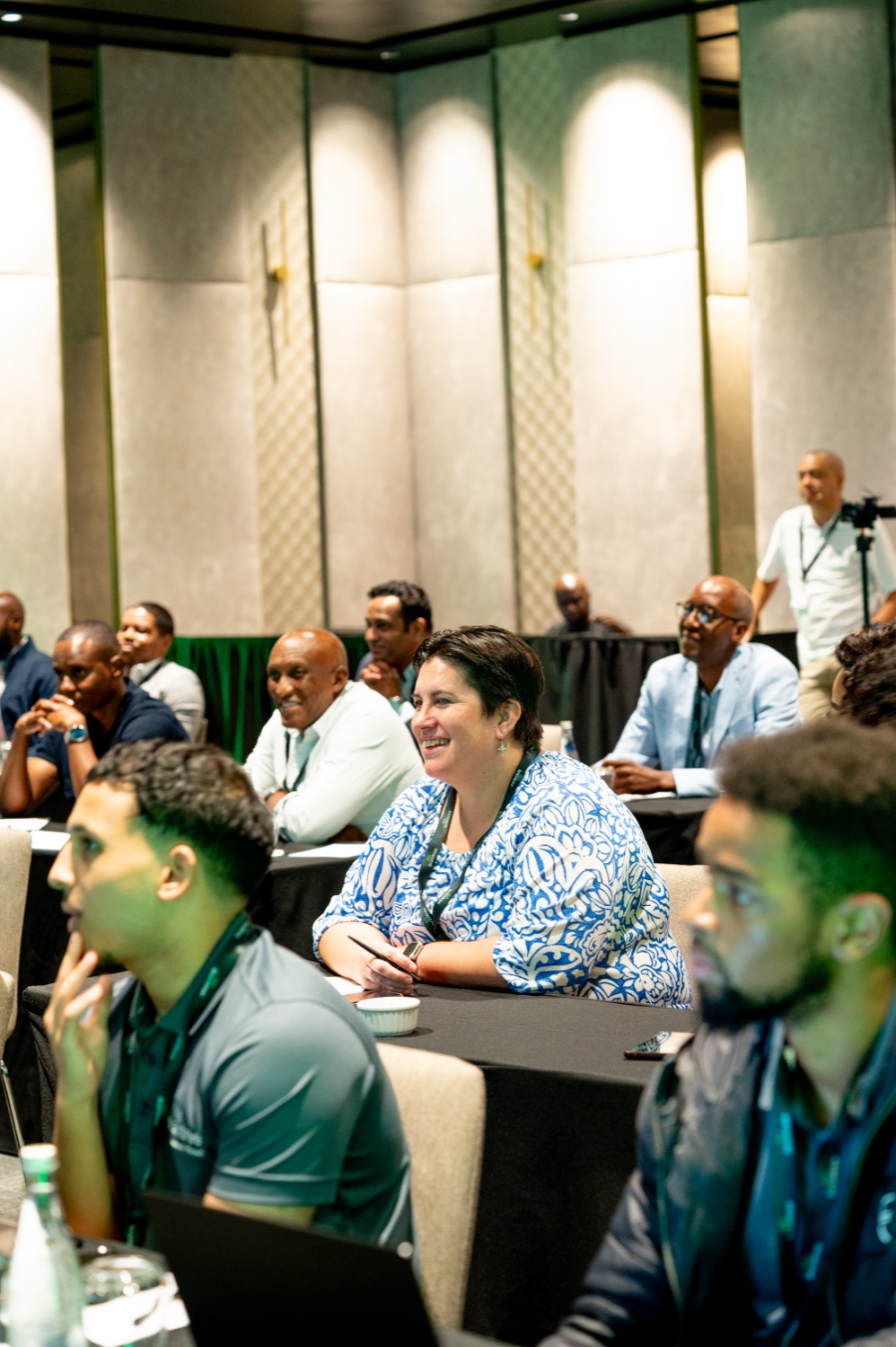
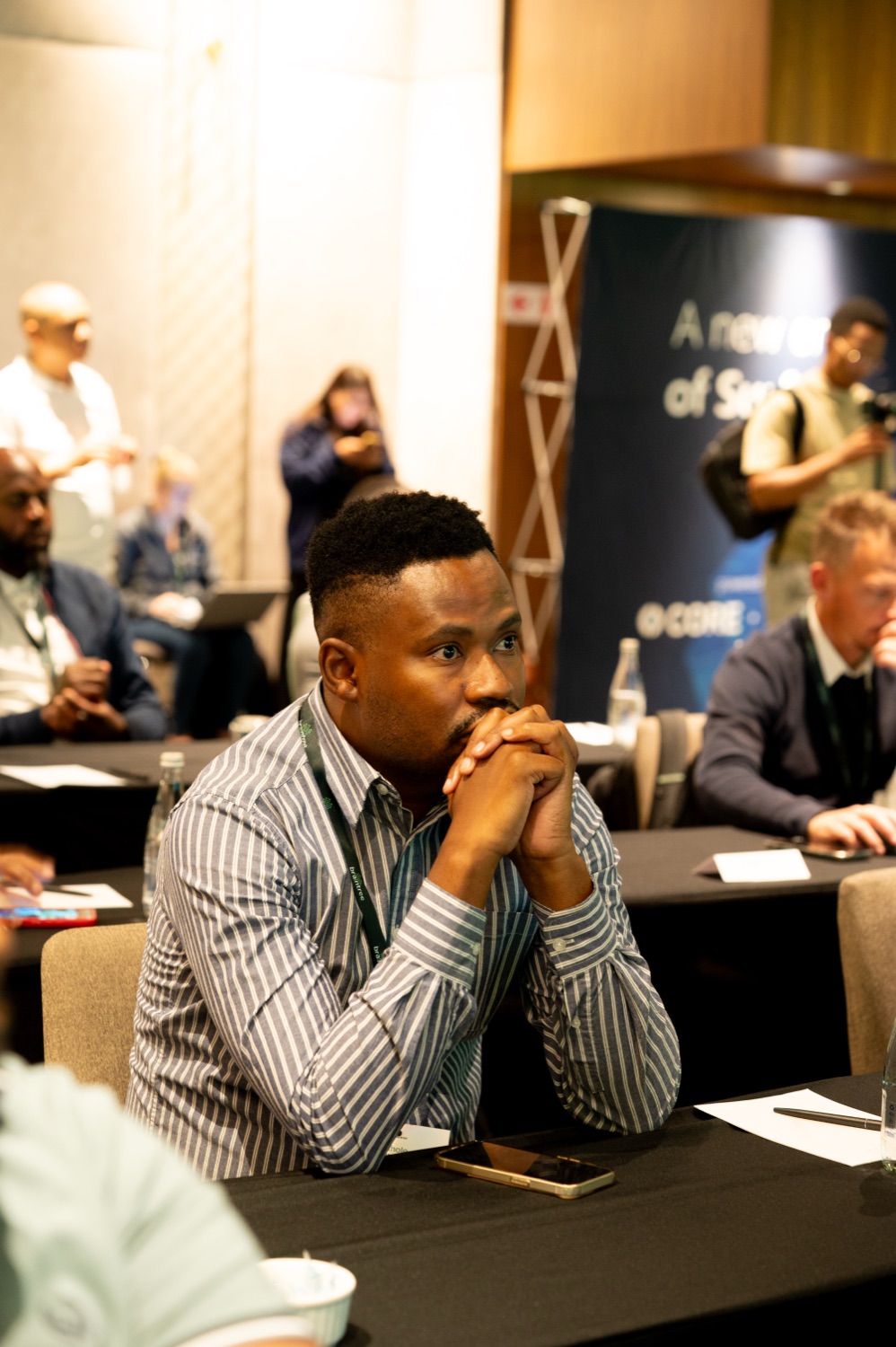
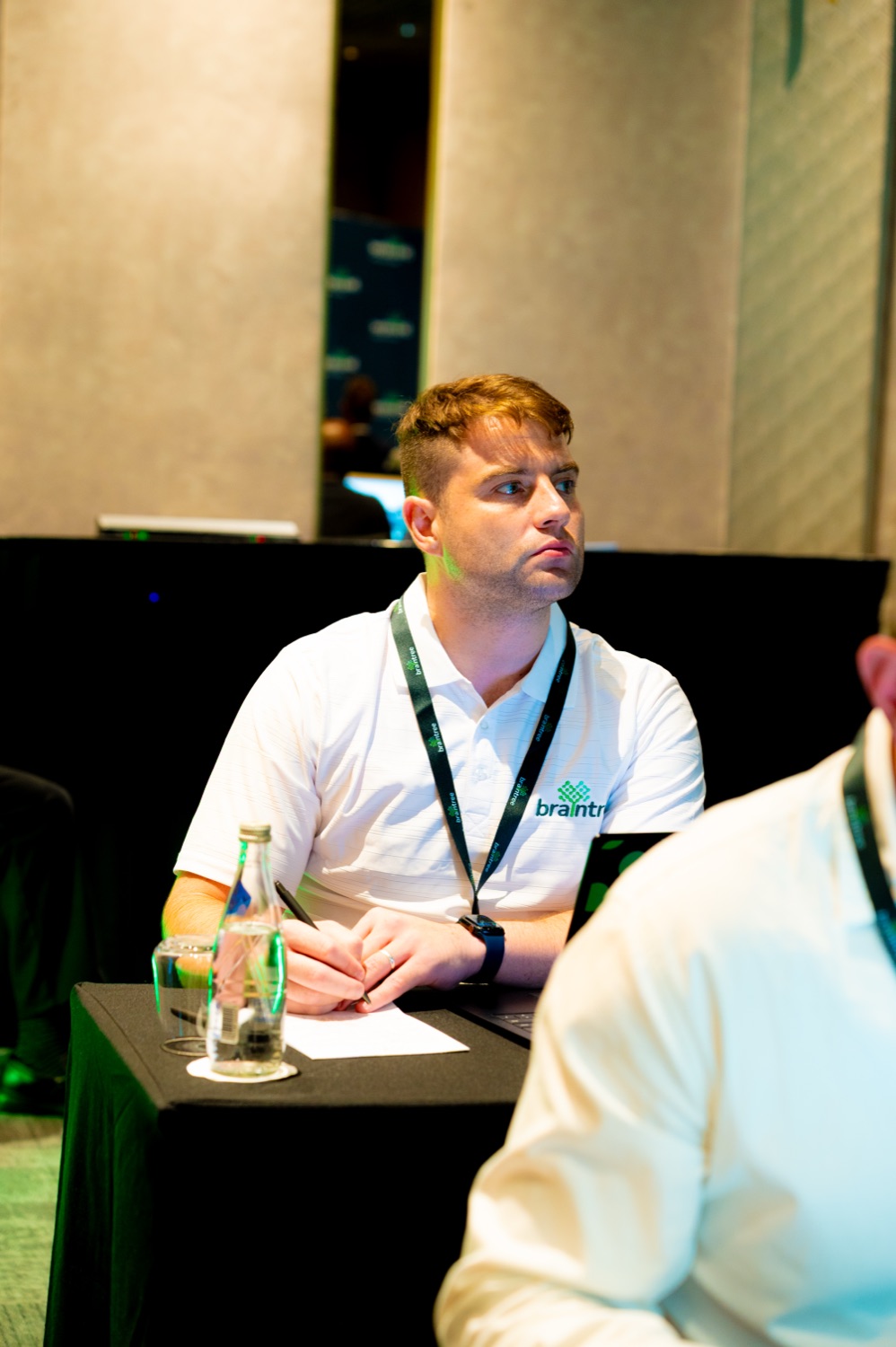
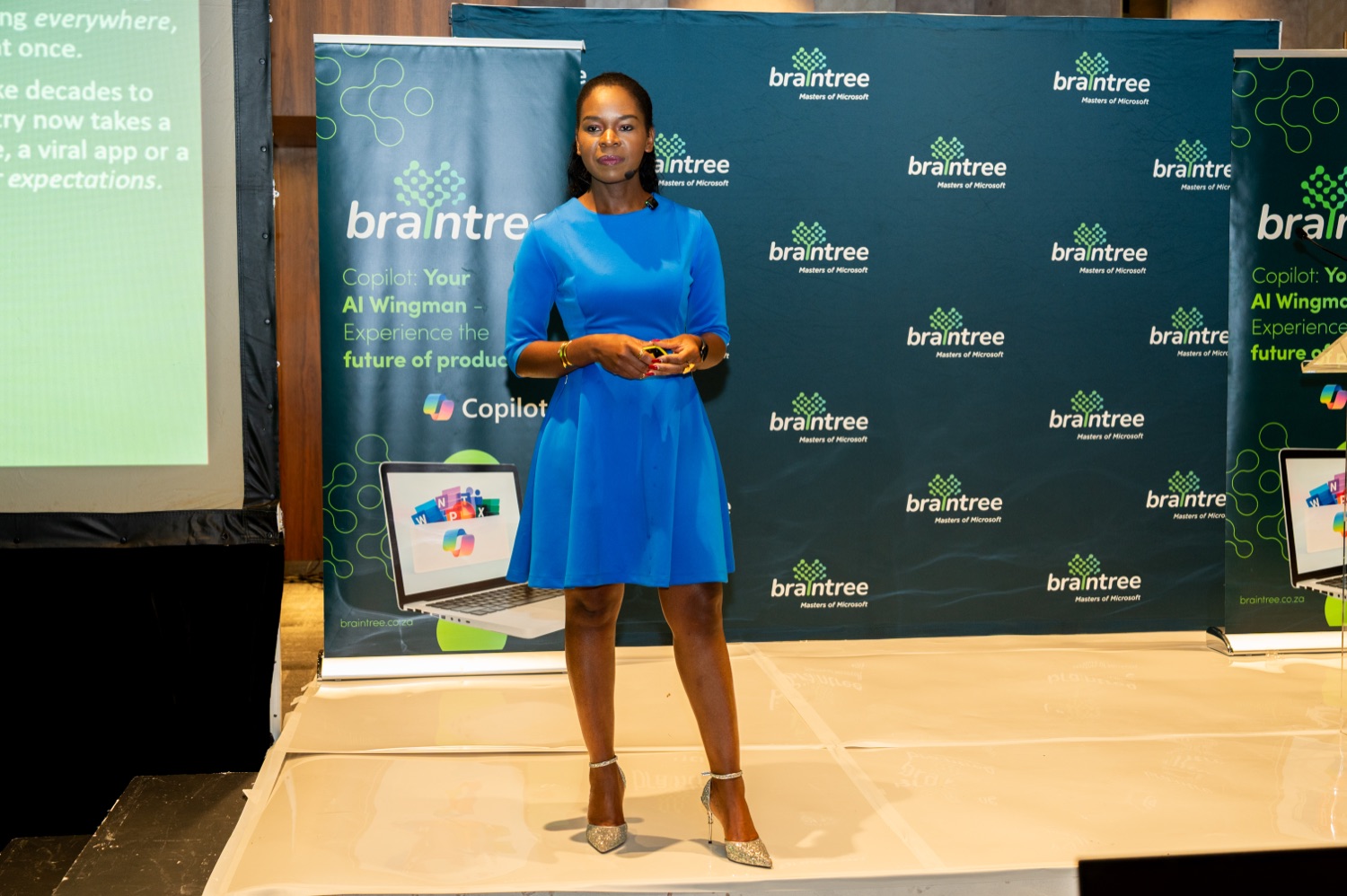
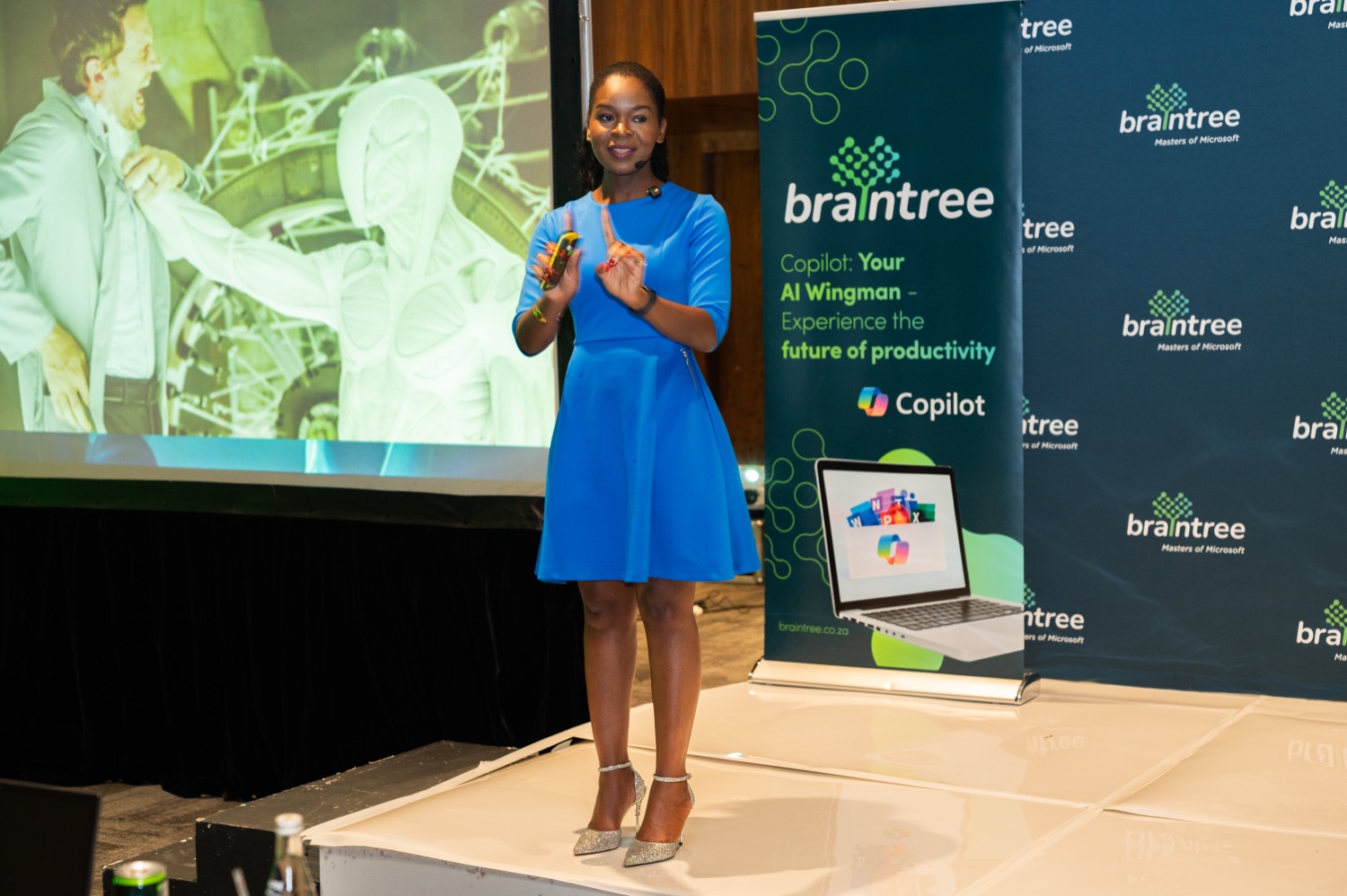
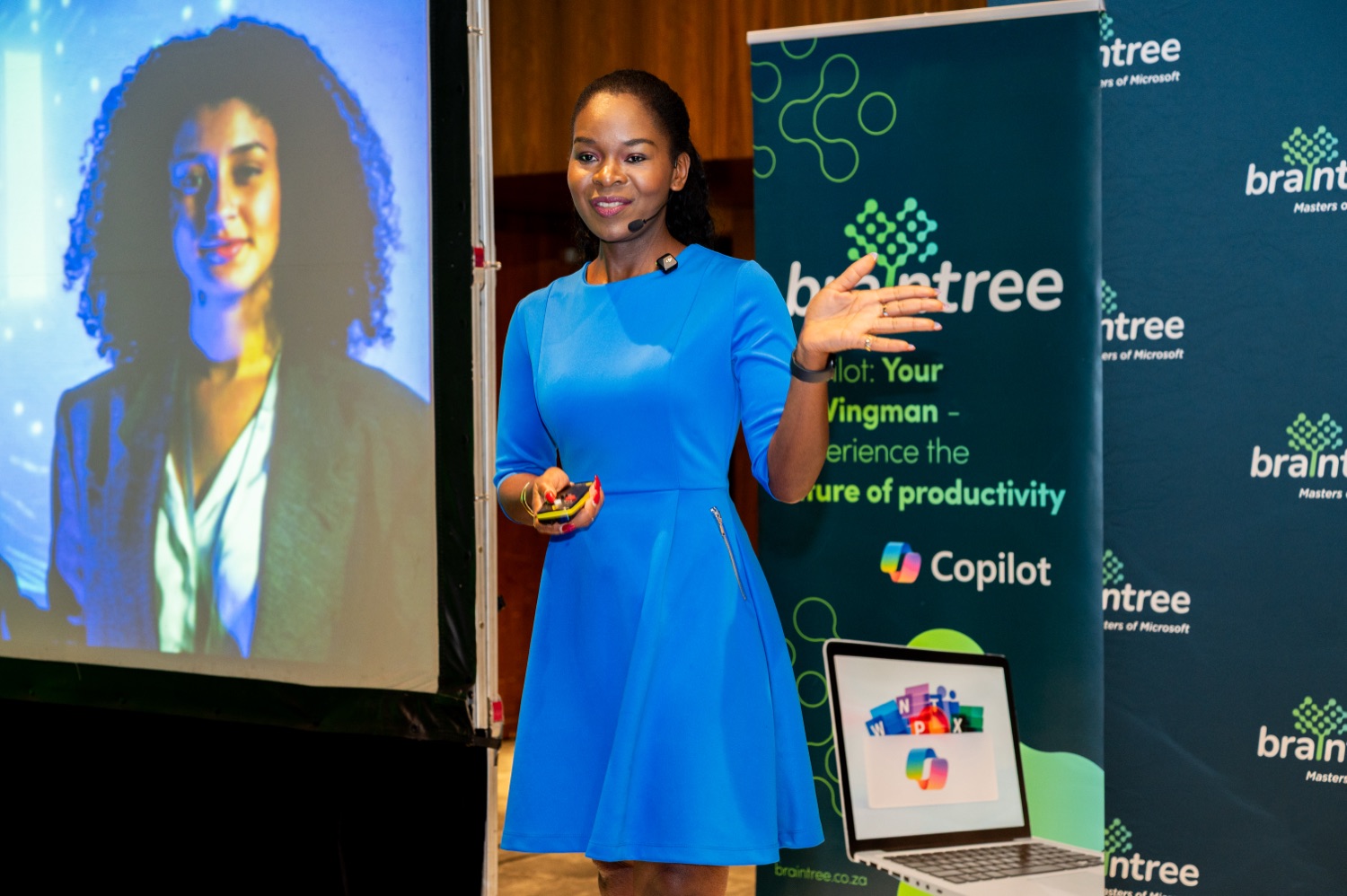
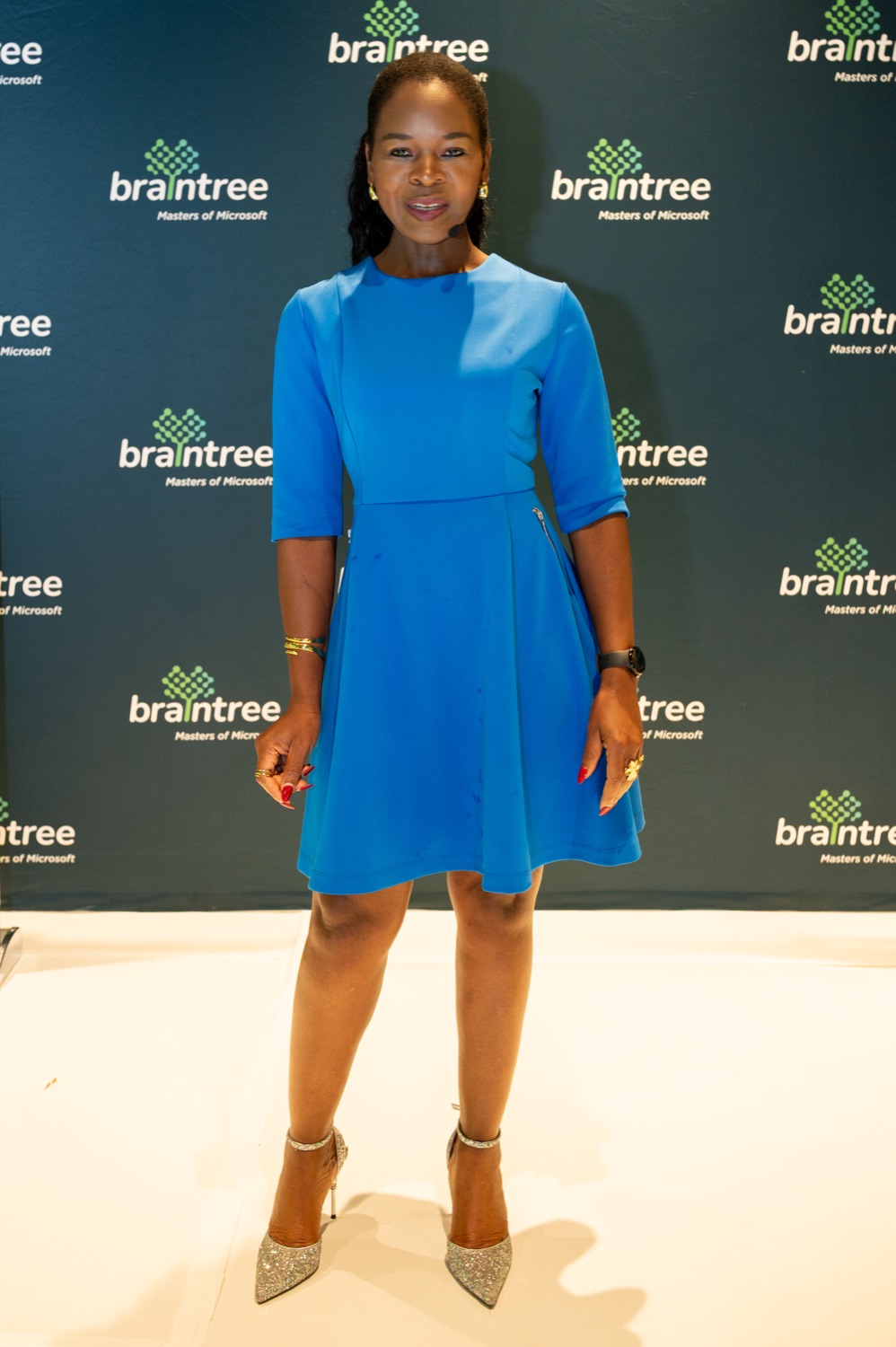
A look back at four hours with 82 business and IT leaders in Johannesburg.

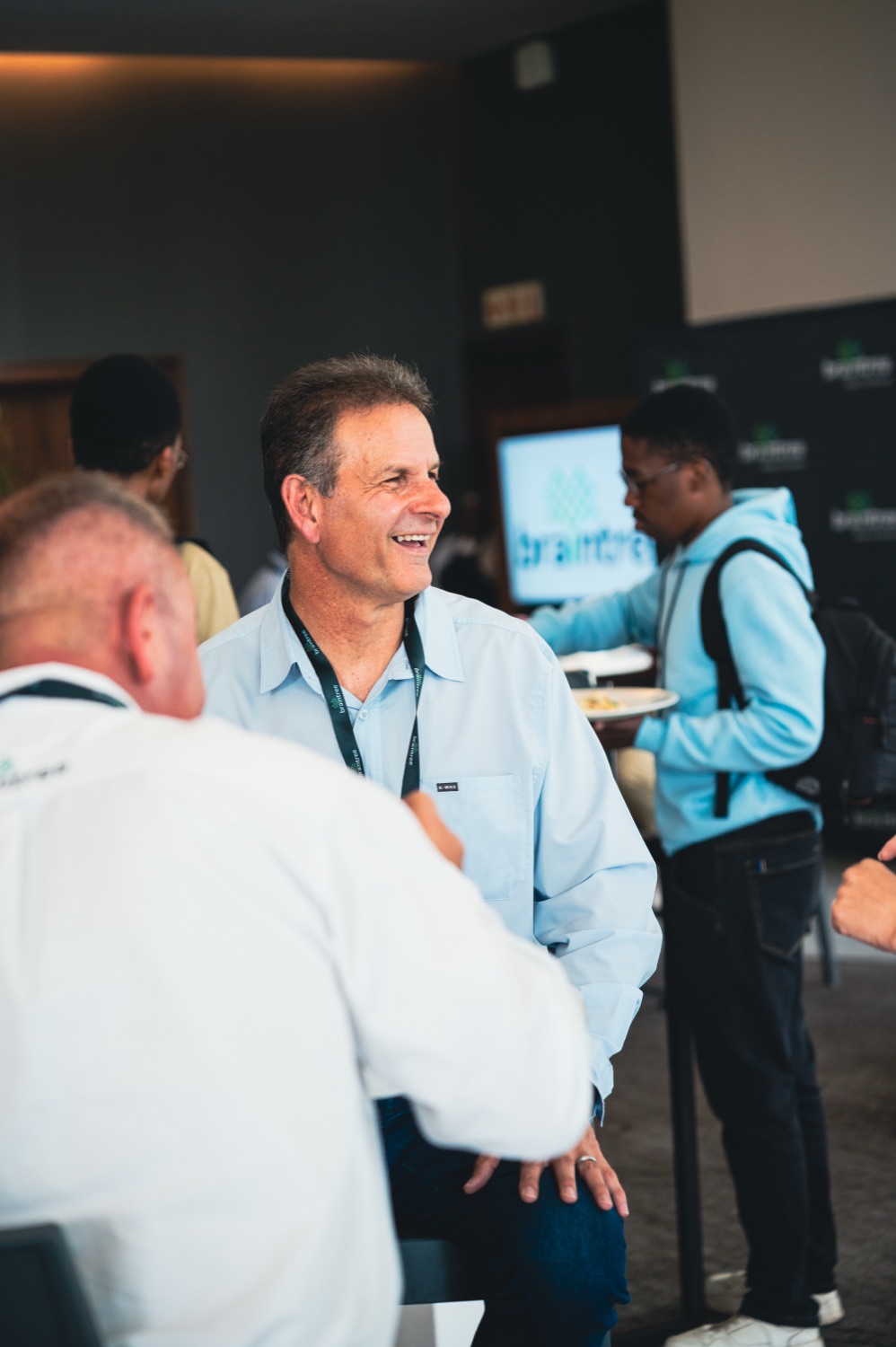

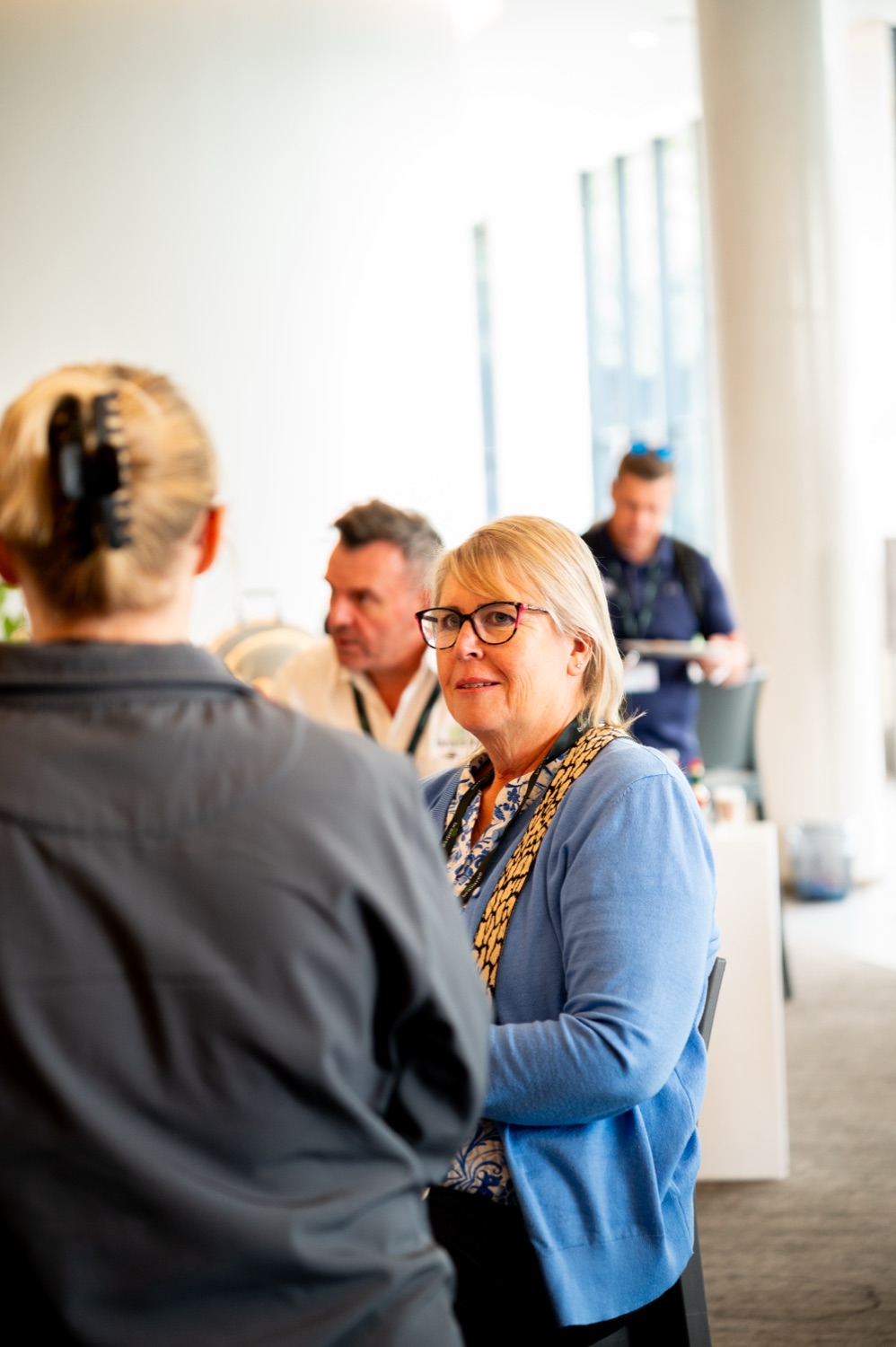


Relive the afternoon
Three minutes of what 82 leaders saw, heard and tried in the room.
Be first to the next one
Braintree runs working sessions like this across the country through 2026, on AI, security and the modern workplace. Leave your details and we will let you know when the next event near you opens. One note per event. No newsletter list, no follow-up sequence.
By submitting this form you agree to our Privacy Policy. Braintree processes your data in accordance with POPIA. You may unsubscribe at any time.
Let's grow.
Related Events
Explore more events from Braintree's 2026 calendar.